
Mongolia: The $7 Billion Ecosystem
Mining Majors Are Quietly Building a Startup Pipeline
Saint Clair Market Intelligence | January 2026
Mongolia Series | Introduction
This article introduces our series examining Mongolia’s transformation from pure resource extraction toward technology-enabled mining and local value capture. The Chimege Systems case demonstrates the thesis in action—corporate demand from mining majors driving startup ecosystem development. Subsequent articles explore the investment landscape, geopolitical positioning through critical minerals, copper value chain maturation, and the broader mining tech startup ecosystem.
Mongolia’s mining sector — anchored by Rio Tinto’s $7 billion Oyu Tolgoi copper-gold operation — is generating an unexpected secondary effect: startup ecosystem development. The thesis is no longer theoretical. Erdenet Mining Corporation, Mongolia’s largest state-owned copper producer, has deployed Chimege Systems’ Egune AI for fully automated tender evaluation — production-grade adoption by a major mining operation. For investors tracking frontier market signals, this corporate-driven demand represents a more durable catalyst than government programmes or venture capital alone.
The $7 Billion Catalyst
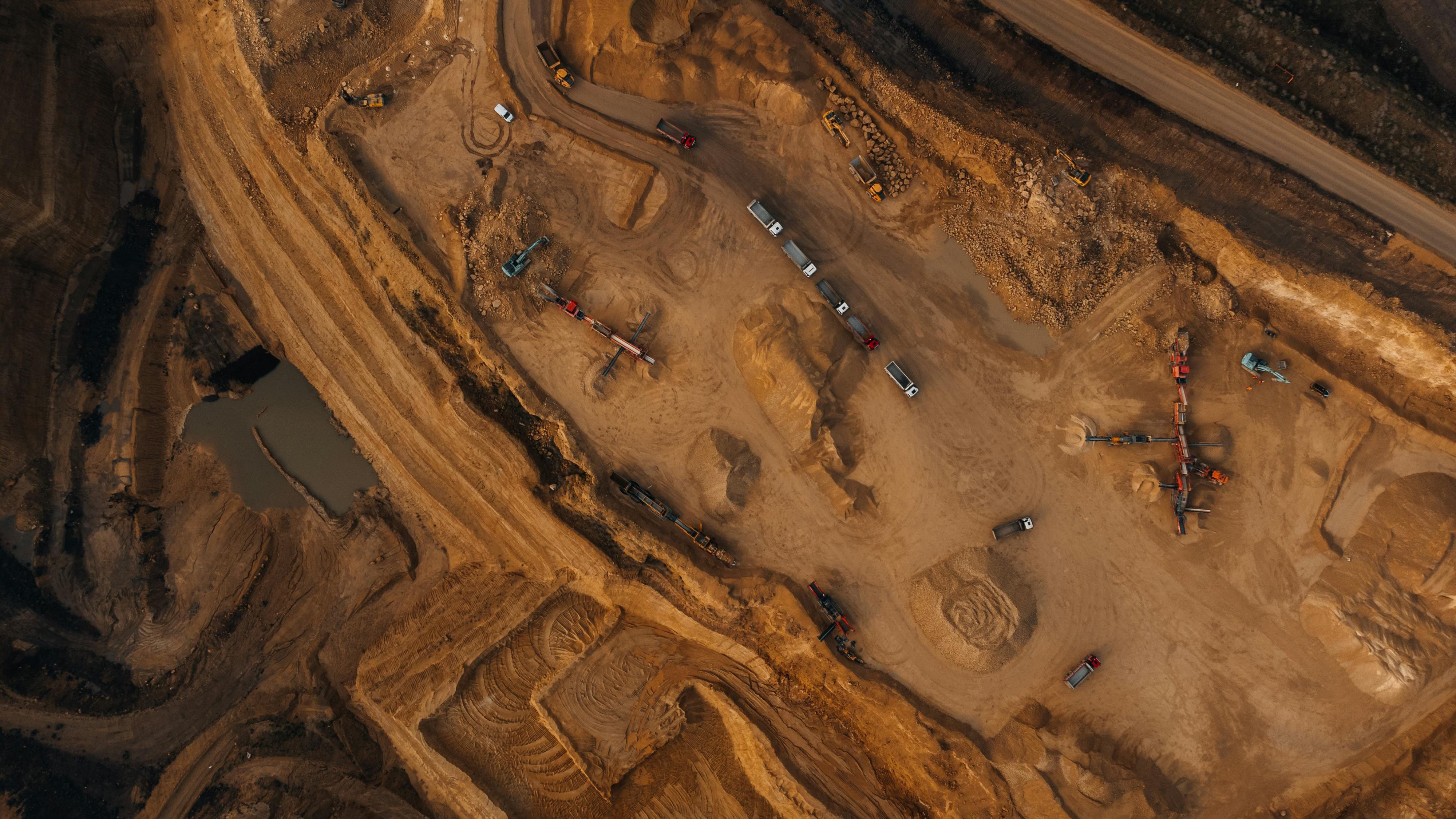
Oyu Tolgoi is one of the world’s largest copper-gold deposits. Located in the South Gobi desert, the operation represents the single largest foreign investment in Mongolia’s history. Rio Tinto holds 66% through its subsidiary, with the Mongolian state holding the remaining 34% through Erdenes Oyu Tolgoi.
The scale matters for ecosystem development. Operations of this magnitude require extensive supply chains: equipment maintenance, environmental monitoring, safety systems, logistics coordination, water management, and workforce services. Historically, these needs were met by international suppliers. That equation is shifting.
Mongolia’s regulatory framework increasingly mandates local content — the share of goods and services sourced domestically. Mining agreements now routinely include procurement targets favouring Mongolian suppliers. For Oyu Tolgoi, this translates into active supplier development programmes designed to build local capacity where none previously existed.
The investment signal: when a $7 billion operation needs local suppliers and cannot find them, it creates them. This is corporate venture development by necessity rather than strategy — and it is proving effective.
The Validation Has Already Arrived
The mining-tech thesis moved from theory to practice in 2025. Erdenet Mining Corporation — Mongolia’s largest state-owned copper producer — has implemented Chimege Systems’ Egune AI for 100% automated tender evaluation. No human oversight. This is not pilot-stage experimentation; it’s production deployment by a major mining operation.
Chimege Systems, founded in 2019 by German-trained software engineer Badral Sanlig, has raised $7.15 million across three rounds — including $3.5 million from Golomt Bank in May 2025. The company is now valued at $38.5 million, commanding 70% of Mongolia’s AI market with 24,000 daily users across its product suite.
The strategic significance extends beyond procurement automation. Mongolia is the 8th country globally to develop its own foundational large language model. Egune’s current model runs at 70 billion parameters on 128 GPUs, trained on Mongolian university texts, library archives, and synthetic data. Speech recognition achieves 98% accuracy in Mongolian.
Why mining companies care: Digital sovereignty. Mining operations handle sensitive procurement data, operational metrics, and commercial intelligence they cannot share with foreign AI providers. Egune deploys offline — functional even in the Gobi Desert — with data remaining within Mongolia. For state-owned enterprises and international miners facing ESG scrutiny, this addresses a genuine constraint that global AI platforms cannot solve.
Chimege’s client roster now includes the Mongolian Parliament (speech recognition), MobiCom (telecom integration), and Golomt Bank (banking applications), alongside Erdenet Mining. The pattern: institutions handling sensitive data choosing local AI over international alternatives.
Where Mining Meets Technology
Beyond AI, the opportunity set emerging from mining operations clusters around specific operational pain points. Each represents a potential startup vertical with a built-in customer base.
Environmental monitoring and compliance ranks among the most pressing. International mining companies face intense ESG scrutiny from investors, lenders, and regulators. Oyu Tolgoi’s financing involves development finance institutions including the European Bank for Reconstruction and Development (EBRD), each with environmental compliance requirements. Real-time air quality monitoring, water quality tracking, dust suppression systems, and emissions reporting create demand for technology solutions — ideally delivered by local providers who understand site conditions.
Safety technology follows similar logic. Underground mining at Oyu Tolgoi’s Hugo North deposit requires sophisticated safety systems. Wearable devices, atmospheric monitoring, personnel tracking, and predictive risk analytics represent procurement categories where local adaptation offers advantages over off-the-shelf international products.
Logistics and fleet management address the operational reality of moving materials across vast distances to Chinese border crossings. Mongolia’s coal exports travel by truck convoy to processing facilities — a logistics challenge where route optimisation, fleet tracking, and predictive maintenance generate measurable cost savings.
Water management carries particular weight in Mongolia’s arid mining regions. Treatment, recycling, and monitoring systems must operate in extreme conditions. Startups developing locally-adapted solutions find receptive corporate buyers.
The pattern across these verticals: mining companies possess problems, budgets, and motivation to solve them. Startups providing solutions encounter shorter sales cycles and more forgiving early customers than typical B2B ventures.
The Local Content Imperative
Understanding the investment dynamic requires grasping the regulatory architecture. Mongolia’s mining agreements increasingly specify local content targets across multiple categories: employment, training, procurement, and services. These are not aspirational guidelines — they are contractual obligations with monitoring mechanisms.
For international mining companies, compliance requires deliberate supplier development. The alternative — paying penalties or jeopardising operating licences — concentrates corporate attention on building local capacity.
This creates what might be termed “forced corporate venturing.” Mining companies become de facto accelerators, identifying capability gaps, supporting local entrepreneurs to fill them, and providing anchor contracts that derisk early-stage ventures. The motivation is regulatory compliance rather than investment returns, but the ecosystem effect is comparable.
Erdenes Mongol, the state mining holding company overseeing assets including Erdenes Tavan Tolgoi (one of the world’s largest untapped coking coal deposits), operates under similar imperatives. Government ownership heightens local content expectations, creating procurement opportunities across the state mining portfolio.
The EBRD and other development finance institutions reinforce this dynamic. Their financing frequently includes local economic development conditions, adding another layer of incentive for mining companies to cultivate Mongolian suppliers.
Ecosystem Infrastructure Taking Shape
The startup ecosystem supporting mining-tech development remains nascent but is professionalising rapidly.
KITE Accelerator, led by former Golomt Bank CEO Bolormaa Luvsandorj, has emerged as a connector between Mongolia’s startup ecosystem and international capital. KITE’s value for mining-tech lies less in direct investment and more in deal flow curation and DFI relationships. The accelerator partners with ADB Ventures ($60 million fund), maintains ties to JICA (which produced the authoritative 2022 ecosystem survey valuing Mongolia’s startup ecosystem at $156 million), and connects Mongolian startups to regional networks.
Through the Digital Startup Awards partnership with IT Park Uzbekistan — a $1 million prize fund spanning eight Central Asian countries — KITE has built pipeline visibility across the region. The 2024-2025 cycle attracted 1,025 applications. For mining-tech specifically, this regional network matters: solutions developed for Mongolian mining conditions may find markets across Central Asia’s resource economies.
The ecosystem remains capital-constrained. No established domestic VC funds exist. Funding flows through corporate investment (Golomt Bank’s backing of Chimege being the largest documented), development finance institutions, and international competition prize money. This is not a disadvantage for mining-tech startups with corporate customers — anchor contracts from mining operations provide revenue that typical frontier market ventures lack.
Reading the Signal
For European investors, Mongolia’s mining-driven startup development carries several implications.
The demand signal is structural, not cyclical. Local content requirements are embedded in mining agreements spanning decades. ESG compliance pressure from international investors and lenders shows no sign of diminishing. These are durable demand drivers independent of commodity price fluctuations.
Corporate customers derisk early-stage ventures. Startups serving mining operations face a different risk profile than typical frontier market ventures. Anchor customers with multi-decade operational horizons, hard-currency revenues, and genuine procurement needs provide revenue visibility unusual for seed-stage companies. Chimege’s $38.5 million valuation reflects this corporate validation.
The ecosystem remains early and illiquid. Mongolia lacks established venture capital infrastructure. Most startup funding flows through angel investors, corporate strategic investment, and development finance programmes. Exit pathways are limited — the Mongolian Stock Exchange offers constrained liquidity, and trade sales require patient capital. Investors should calibrate expectations accordingly.
Digital sovereignty creates defensible positioning. Chimege’s success demonstrates that data sensitivity creates genuine competitive moats. Mining companies, state enterprises, and financial institutions choosing local AI over international alternatives are making strategic decisions, not settling for inferior products. This dynamic may repeat across other technology categories.
Mining expertise transfers. Multinational mining operations have trained a generation of Mongolian engineers, geologists, data analysts, and operations managers. This talent pool increasingly feeds startup formation, with founders applying operational knowledge gained at scale to technology ventures.
The Longer View
Mongolia presents an unusual case study in ecosystem development. Where most frontier markets pursue top-down strategies — government innovation programmes, technology park construction, venture fund incentives — Mongolia’s startup ecosystem is emerging bottom-up from the operational requirements of its dominant industry.
This is not a venture capital story. Returns will not follow typical fund timelines or exit multiples. The opportunity lies in understanding how corporate demand shapes ecosystem development in resource-dependent economies — and positioning accordingly.
The mining majors are building a startup pipeline because they must. Chimege’s $38.5 million valuation and Erdenet Mining’s production deployment demonstrate the thesis is no longer speculative. The question for investors is whether to follow the signal.
Continue reading the Mongolia Series:
Article 1: Mongolia’s Mining Investment Landscape — Public listings, sovereign wealth fund, and regulatory evolution
Article 2: Mongolia Leverages Critical Minerals for Geopolitical Autonomy — US-Korea dialogue, French uranium investment, and third neighbour policy
Article 3: Mongolia’s Copper Value Chain Matures — $1 billion Khanbogd smelter and local value capture
Article 4: Mongolia’s Mining Tech Startups — Blockchain carbon tracking, digital platforms, and the ecosystem shift beyond extraction
Sources:
Rio Tinto Oyu Tolgoi operations and ownership structure
https://www.riotinto.com/operations/mongolia/oyu-tolgoi, https://www.ot.mn
Chimege Systems / Egune AI
https://chimege.com, https://egune.com
FFNews funding announcement, May 2025
https://ffnews.com/newsarticle/mongolian-ai-startup-secures-3-5-million-usd-to-advance-national-ai-infrastructure-and-digital-future/
Rest of World feature, September 2025
https://restofworld.org/2025/mongolia-egune-ai-llm/
EBRD Mongolia programme
https://www.ebrd.com/mongolia.html
Erdenes Mongol and Erdenes Tavan Tolgoi
https://erdenesmongol.mn, https://erdenestt.mn
KITE Accelerator
https://kite.mn
JICA Mongolia Startup Ecosystem Survey (2022)
https://www.jica.go.jp/Resource/mongolia/english/office/topics/220413.html
Invest Mongolia Agency
https://investmongolia.gov.mn/en
Disclaimer: This article is for informational purposes only and does not constitute investment advice or an offer to invest in any fund or vehicle. Saint Clair does not provide investment recommendations. All decisions should be made based on independent research and consultation with qualified advisors.
About Saint Clair – Advisory & Capital: Saint Clair practises Capital Diplomacy — fostering cross-border investment relationships between Europe and Asia through trust, insight, and strategic facilitation. Saint Clair Asia partners with overlooked Asian innovation ecosystems where emerging opportunities and quality talent intersect. We bridge portfolio companies to European markets, partners, and acquirers. Since 2016, we have specialised in the Europe-Asia investment corridor.
Learn more: saintclair.sg | saintclair.asia | Contact: contact@saintclair.sg