
The Split That Became Personal
When the US-China bifurcation stops being a headline and starts being a portfolio question
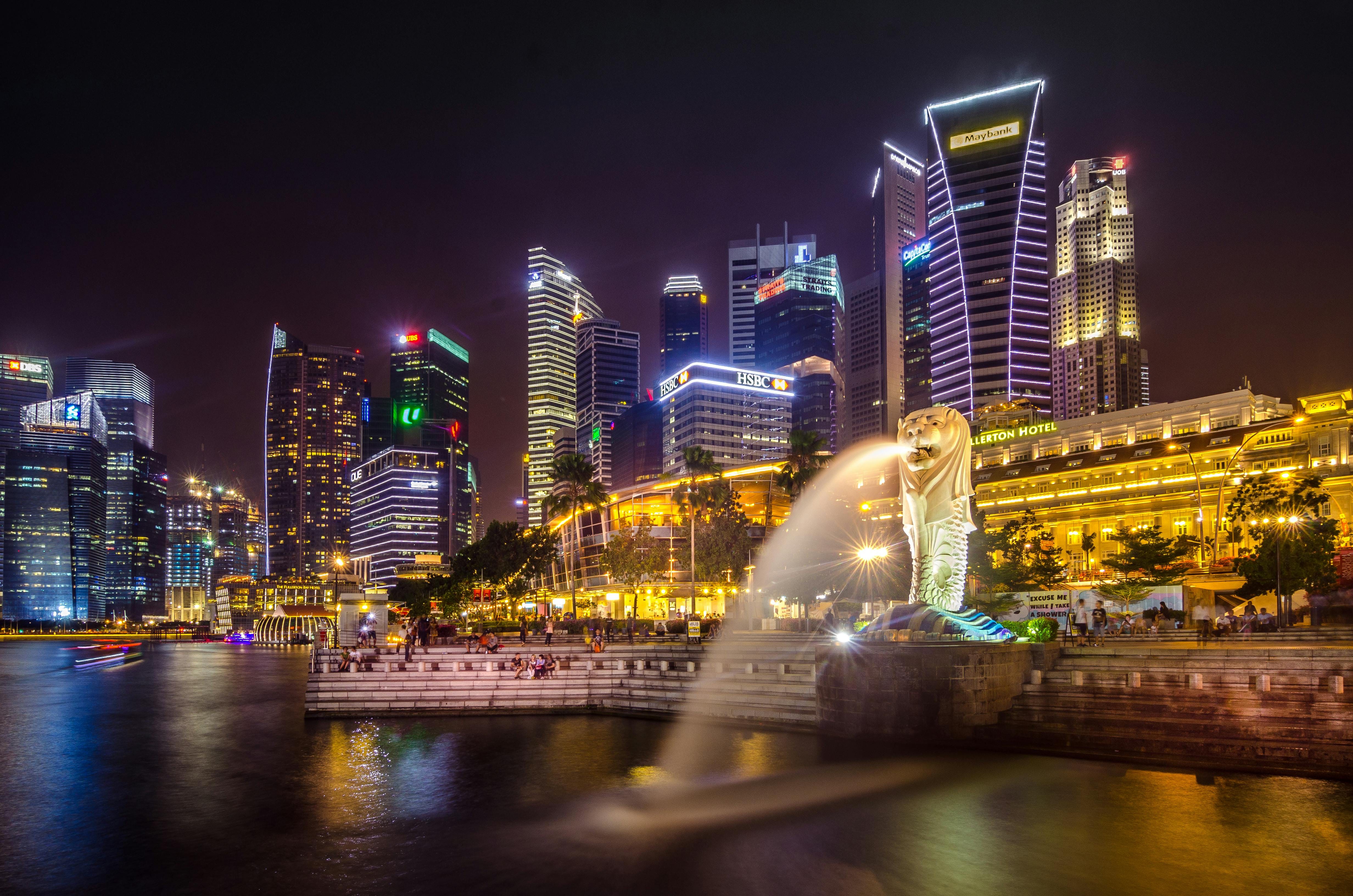
Saint Clair · Market Intelligence | April 2026
The US-China bifurcation has crossed a threshold. What was geopolitical abstraction is now a structuring question for every Singapore-based principal.
What the Numbers Actually Say
In 2018, roughly one in five goods entering the United States came from China. By the end of 2025, that figure had fallen below one in ten. At the tariff peak in mid-2025, China’s monthly share briefly touched 7% — a level not recorded since 2001 — before recovering somewhat as duties were reduced. US goods imports from China totalled $308 billion in 2025, down nearly 30% from the previous year.
These are US Census Bureau figures, and they tell a dramatic story. The New York Fed tells a more nuanced one: comparing American and Chinese trade data reveals over $100 billion in “missing imports” — a gap driven partly by measurement discrepancies and partly by trade rerouting through intermediaries such as Taiwan and Vietnam. The decoupling is real, but it is also incomplete. Chinese content still enters the US supply chain — it simply takes a longer path to get there.
For an observer in Washington or Beijing, this is a trade policy statistic. For a principal sitting in Singapore — a city-state whose trade-to-GDP ratio stands at 322% — it is something more immediate. Singapore does not manufacture the goods at either end of this corridor. It structures, finances, intermediates, and governs the transactions that move between them. When the corridor fractures, every function Singapore performs is affected.
The tariff trajectory makes the structural point concrete. US duties on Chinese goods peaked at 145% in April 2025 before the Geneva agreement brought them to 30%. The Busan summit in October reduced the effective rate further to roughly 20%, but the Supreme Court’s February 2026 ruling striking down IEEPA-based tariff authorities, followed by fresh Section 301 investigations, has created an environment where the rate itself is less significant than its instability. The tariff architecture is unreliable — and unreliability, for anyone running cross-border capital or supply chains through Singapore, is the operating condition that demands structural preparation.
Singapore Knows — Officially
Singapore’s government has said as much, with unusual directness. In his 2026 New Year Message, Prime Minister Lawrence Wong stated: “To remain competitive, we cannot simply do more of the same. We must rethink, reset, and refresh our economic strategies.” His Budget 2026 speech in February framed the context plainly: the US-led multilateral order is over, and Singapore can neither rest on its position nor wait for conditions to improve.
The budget backed the language with capital. S$1 billion was committed to Startup SG Equity, expanding support from early-stage to growth-stage deep technology companies. A further S$1.5 billion was allocated to the Equity Market Development Programme, and S$37 billion committed to research and innovation over five years. These are not incremental adjustments. They are a government repositioning its economic infrastructure for a world it acknowledges has changed.
Deputy Prime Minister Gan Kim Yong was more direct still. In March 2025, he warned that the multilateral free trade system “has been under tremendous stress in recent years, and is at risk of being fractured” — language that, from a Singapore minister, constitutes an unusually blunt acknowledgement of structural rupture.
The ISEAS-Yusof Ishak Institute’s annual State of Southeast Asia Survey captures the shift in real time. When Singaporean respondents were asked which strategic rival ASEAN should align with if forced to choose, the share selecting the United States fell from 61.5% in 2024 to 52.9% in 2025 — still a majority, but a narrowing one. The preference is noted. But the more telling finding is that the question is now being asked at all. Five years ago, Singapore’s strategic position was predicated on never having to choose. That premise is eroding.
Five Dimensions of Exposure
Government repositioning is necessary but insufficient for the individual principal. Budgets address national competitiveness. They do not restructure your portfolio, reassess your counterparties, or stress-test your corporate architecture against scenarios that did not exist when you set it up.
This is where the bifurcation becomes personal.
Consider five dimensions of exposure that most Singapore-based principals have not systematically assessed:
Portfolio domicile. Where are your assets held? What percentage sits in jurisdictions that could be caught in sanctions escalation, capital controls, or regulatory divergence between blocs? A portfolio constructed for a globalised world may carry concentration risks that only become visible under bifurcation stress.
Supply chain dependency. If you own or invest in operating businesses, do they rely on cross-bloc supply chains? The rerouting data — Chinese goods moving through Vietnam, Malaysian intermediaries, Johor-based manufacturing — suggests the supply chain has already adapted, but adapted in ways that create new dependencies rather than eliminating old ones.
Counterparty concentration. Are your banking relationships, fund positions, or key commercial partnerships concentrated on one side of the divide? A principal whose private bank, fund administrator, and primary trading counterparties all sit within a single regulatory jurisdiction has a resilience problem they may not have examined.
Regulatory jurisdiction. Is your corporate structure optimised for a world that no longer exists? Holding companies, IP vehicles, and treasury functions designed for frictionless cross-border capital flow face a different calculus when the borders themselves are being redrawn.
Network resilience. Do you maintain credibility and active relationships with both sides — or has your professional network quietly drifted toward one camp? Networks are the slowest asset to rebuild and the easiest to let atrophy. By the time you notice the drift, the rebalancing cost is substantial.
None of these dimensions is new in isolation. What is new is the requirement to assess them simultaneously, as a system, under conditions of genuine structural uncertainty. A weakness in one dimension compounds the others. A portfolio concentrated in one bloc, served by counterparties in the same bloc, governed by a structure designed for a different era, connected to a network that has already chosen sides — that is not a diversified position. It is an unexamined bet.
The Structural Obligation
The principals who will navigate the next three years well are not those with the most information about US-China relations. That information is abundant and, for the most part, freely available. The advantage belongs to those who have translated the geopolitical diagnosis into a structural self-assessment — and acted on the findings before the next recalibration forces the issue.
Singapore’s government has begun this work at the national level. The Budget 2026 measures, the Economic Strategy Review, and the institutional language all indicate a state that has absorbed the diagnosis and is repositioning accordingly.
Every principal operating from this city faces the same structural obligation. Those still managing wealth, businesses, and networks on assumptions that belonged to the world before the split — they are not diversified. They are exposed.
Sources:
US Census Bureau, Trade in Goods with China: https://www.census.gov/foreign-trade/balance/c5700.html
Federal Reserve Bank of New York, Liberty Street Economics, “U.S. Imports from China Have Fallen by Less Than U.S. Data Indicate” (February 2025): https://libertystreeteconomics.newyorkfed.org/2025/02/u-s-imports-from-china-have-fallen-by-less-than-u-s-data-indicate/
World Bank, Trade (% of GDP) — Singapore: https://data.worldbank.org/indicator/NE.TRD.GNFS.ZS?locations=SG
Congressional Research Service, “Presidential 2025 Tariff Actions: Timeline and Status”: https://www.congress.gov/crs-product/R48549
Prime Minister’s Office Singapore, 2026 New Year Message: https://www.pmo.gov.sg/newsroom/2026-new-year-message-by-pm-lawrence-wong/
Ministry of Finance Singapore, Budget 2026: https://www.gov.sg/budget2026/
Enterprise Singapore, Startup SG Equity (March 2026): https://www.enterprisesg.gov.sg/resources/media-centre/media-releases/2026/march/mr01026_startup-sg-equity
Ministry of Trade and Industry, Speech by DPM Gan Kim Yong at MTI’s Committee of Supply Debate 2025 (March 2025): https://www.mti.gov.sg/newsroom/speech-by-dpm-and-minister-for-trade-and-industry-gan-kim-yong-at-mti-s-committee-of-supply-debate-2025/
ISEAS-Yusof Ishak Institute, The State of Southeast Asia: 2025 Survey Report (April 2025), Q32: https://www.iseas.edu.sg/wp-content/uploads/2025/03/The-State-of-SEA-2025-1.pdf
Disclaimer: This article is for informational purposes only and does not constitute investment advice. All decisions should be made based on independent research and consultation with qualified advisors.
About Saint Clair — Advisory & Capital: Saint Clair designs and builds cross-border capital infrastructure between Europe and Asia — proposing access where access is scarce, and creating structure where structure is absent. Since 2016.
Learn more: saintclair.sg | Contact: contact@saintclair.sg