
Where Smart Capital Is Quietly Positioning
Why Axiata Is Doubling Down on Sri Lanka
Saint Clair Market Intelligence | January 2026
A Regional Giant’s Endorsement
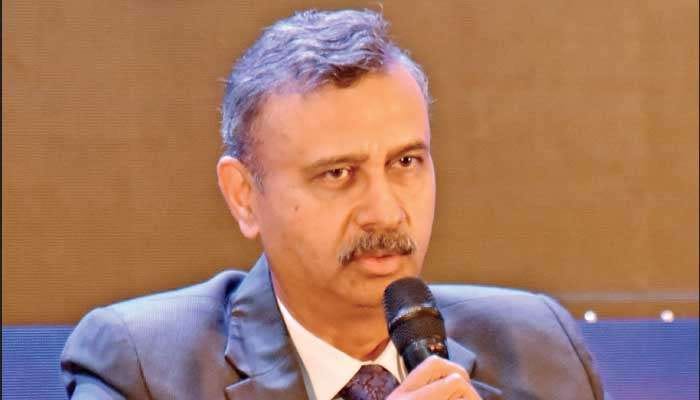
When Axiata Group CEO Vivek Sood addressed the Sri Lanka Economic Summit this month, his message extended well beyond telecommunications. The leader of a USD 5 billion regional conglomerate offered an unusually candid endorsement of Sri Lanka as an investment destination — one that carries weight precisely because Axiata has exited other markets where conditions disappointed.
“We are not fly-by investors coming to monetise and leave,” Sood told the Summit. “Some markets we exited because the market structure wasn’t conducive or the Government’s future vision wasn’t very clear. In Sri Lanka, it’s different.”
His remarks arrive alongside Dialog Axiata’s announcement of an additional USD 100 million investment, bringing cumulative FDI to USD 3.37 billion — the largest single foreign direct investment in Sri Lankan history. But the significance extends beyond telecommunications infrastructure. For investors evaluating Sri Lanka’s startup ecosystem, Sood’s endorsement validates years of groundwork by local pioneers who built venture capital infrastructure when none existed.
The Investment Thesis Behind the Commitment
Sood articulated an investment framework that sophisticated LPs will recognise: decisions driven not merely by shareholder returns but by what he termed “return to stakeholders” — encompassing government vision, regulatory environment, macroeconomic conditions, market opportunity, and talent depth.
“Every business has to decide where to put its capital,” he explained. “For us, the decision is always based on not just profit to shareholders. It’s the returns to the stakeholders. That starts with the vision of the Government, the regulatory environment, the macro situation, the opportunity and the level of talent.”
This framework identified several factors underpinning Axiata’s long-term commitment. The government’s digital economy vision — including its stated target of attracting USD 15 billion in investment by 2030 — provides policy alignment. “Connectivity plays a very important role in enabling that digital economy,” Sood noted. “We believe we can add value not just to the Government’s vision, but to society in healthcare, financial services, education and more.”
Equally significant was his assessment of regulatory culture. “There are challenges in every market,” he acknowledged. “But what we find attractive is the willingness to consult and have a dialogue. If you have that willingness to discuss and debate, you find solutions that are long-term and value-accretive.”
Axiata has substantiated this conviction through action. Dialog has served as the group’s test bed for new technologies across Asia — early rollouts of 2G, 3G, 4G, and now 5G trials all deployed first in Sri Lanka. “The desire of Sri Lankans to innovate and try out new things is an attractive proposition,” Sood added.
The Ecosystem These Conditions Created
Sood’s validation arrives after years of ecosystem construction by local pioneers. When Prajeeth Balasubramaniam and Rajan Anandan founded BOV Capital in 2009, institutionalised startup investment barely existed in Sri Lanka. They built not merely a fund but foundational infrastructure: the Lankan Angel Network (2012), the Venture Engine programme, and eventually BOV Capital’s first institutional fund — LKR 2 billion focused on B2B tech startups with regional potential.
The turning point came in December 2017 when Dialog Axiata launched the Digital Innovation Fund (DIF) — LKR 2.3 billion managed by BOV Capital. A major regional corporate deploying institutional capital into Sri Lankan startups represented validation that the ecosystem could absorb and deploy institutional-scale investment.
Proof followed. In December 2019, Zilingo’s acquisition of nCinga Innovations for USD 15.5 million delivered a 300% return to LPs — the largest technology exit in Sri Lankan history at the time. The ecosystem had demonstrated it could generate returns, not merely deploy capital.
The Gap European Capital Can Fill
For international investors, Sood’s endorsement carries particular weight because it comes with comparative context. Axiata has exited markets; it has chosen to double down on Sri Lanka. That differentiation — articulated publicly by a Group CEO accountable to shareholders — provides signal that desk research alone cannot replicate.
The ecosystem has now progressed through recognisable development stages: angel networks, domestic institutional capital, corporate-backed funds. What remains notably absent is international venture capital — particularly European. The pathways connecting Sri Lankan startups to European strategic acquirers, corporate partners, and follow-on investors remain underdeveloped.
This represents both a gap and an opportunity. The fundamentals Sood cited — talent, regulatory dialogue, innovation appetite — exist. BOV Capital has demonstrated that local fund management can deploy capital effectively and generate exits. What’s lacking is the connective tissue to European capital and networks.
The opportunity for international VC is complementary rather than competitive. BOV Capital’s strength lies in domestic networks and regional B2B expansion. A European-focused vehicle would bring different assets: LP networks among European family offices, exit pathways to European strategic acquirers, and cross-border connections that add to rather than duplicate existing infrastructure.
Reading the Signals
Three observations merit attention.
First, the “test bed” positioning matters. Axiata choosing Sri Lanka for technology firsts across a regional footprint spanning 290 million subscribers signals something beyond market size. It reflects confidence in execution capability, regulatory accommodation, and talent depth. These same attributes underpin startup ecosystem potential.
Second, timing and recovery create windows. Sood’s remarks come as Sri Lanka emerges from its most significant economic crisis in decades. Investors establishing position during recovery phases — when consensus remains cautious — often capture advantages unavailable during periods of broad optimism. The government’s USD 15 billion investment target by 2030 provides policy tailwind.
Third, pioneer credit is due. The ecosystem’s current investability exists because individuals like Prajeeth Balasubramaniam accepted risk when outcomes remained uncertain. Their work building institutional infrastructure — angel networks, fund structures, talent pipelines — created the foundation upon which subsequent investors can build. Any international fund entering Sri Lanka inherits this ecosystem without bearing its construction costs.
The question for international capital is no longer whether Sri Lanka’s ecosystem functions. The proof points exist: institutional deployment, documented exits, regional corporate validation. The question is whether the current configuration — ecosystem maturity coinciding with economic recovery and European capital absence — represents the moment to establish position in a market that has validated its fundamentals.
Sources:
Axiata sees Sri Lanka emerging as digital investment hub: Group CEO Vivek Sood — Daily FT, 9 December 2025
Dialog Axiata Group commits further USD 100 million to expand digital infrastructure — Dialog Axiata, 2025
Disclaimer: This article is for informational purposes only and does not constitute investment advice. Saint Clair - Advisory & Capital does not provide investment recommendations. All decisions should be made based on independent research and consultation with qualified advisors.
About Saint Clair - Advisory & Capital: Saint Clair bridges European and Asian investment ecosystems through our proprietary Capital Diplomacy™ framework. Saint Clair Global supports Asian technology companies with European market entry, partnership development, and cross-border expansion. Since 2018, we have specialised in navigating the institutional corridor between Asia and Europe.
Learn more: saintclair.sg | Contact: contact@saintclair.sg